
| Next | Previous | Index | Tellout Home |
19. African Racial Tension
South West Africa
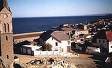 There was only one lamp post in Luderitz in South West Africa, now called Namibia. Around it, on that day, a large crowd of black faces gathered awaiting our outdoor witness start. As I spoke, I happened to mention a story about the funeral of Abraham Lincoln(1809-1865) when a black woman in the crowd watched the coffin of the assassinated president pass. Holding up her little child to see, she said, "Look, there is the man who died that we might be free." As I finished my message, the Bishop whispered from behind, "Look, Cap, you'll get us all in trouble mentioning Abe Lincoln!" South West Africa with its African form of racial tension, was not America! An invitation had come from Bob Mize, my good friend and Head of the Associate Mission in Hays, Kansas, and the newly consecrated bishop of Damaraland. Bob wanted me to work with his native lay workers, hoping to form a Church Army from them as we had done with the Sioux Indians a few years earlier. Even as I climbed the plane's steps in California to Namibia, I wondered whether I would make it. In America, Church Army Headquarters had seen scary newspaper reports of bubonic plague in Namibia, a country in South West Africa, and wanted me to stay at home. The National Director, knowing my determination, had written, saying, "Go Ahead." ✞
Windhoek Diamond Oasis
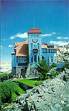 Flying into Windhoek, the capital of Namibia, I knew that I had made it. The capital looked like a glistening diamond in a golden setting in the glinting sun. There to meet me at the airport was the bishop, a very imposing flamboyant looking figure. Some of the Bishop's assistants I met later at the cathedral were equally unusual. Bishop Mize did not delay and put me to work on the South African border in the diamond mining center of Oranjemund, on the banks of the Orange River mouth. The overland journey in a bumpy security bus through the sun baking Namibian desert was long and arduous. Some roads turned into impassable floods in the rains. After many stops, we arrived in the mining settlement. Immediately there were frustrations and problems. ✞
Four Languages Simultaneously
My first meeting came as a shock. As I answered questions, I discovered that four languages were in use simultaneously. What garble! The confusion reminded me of the tower of Babel! The South African interpreters embarrassed Catechist James Kalauma by saying that our presence assures us that American Christians care. There was a problematic color problem. I wanted to hold a service on a location for the workers' families but discovered that I had to have a pass from the Police stating how long I intended staying and what I planned to do. Security men lurked everywhere. Queues of workers lined up for a humiliating x-ray search of their persons before they could leave town. I didn't mind the humiliation for the privilege of meeting with the five native and one white congregation there. Wherever I preached, the interpreter invariably embarrassed me by telling me that the people had said, "Your presence assures us that Christians in America care." One evening, several hundred men gathered in a big tin recreation hut in town. As I preached, catechist James Kalauma, a happy twenty years old, translated by my side. When I finished, he, too, gave a message in his tongue. Everyone hung on his every word. From his action, he was retelling the story of the Prodigal Son. I was the only white man there, and hardly understood a word, but his message came through to me loud and clear. Afterward, I just had to shake his hand in appreciation and admiration. Catechist James Kalauma had, I sensed, a great future. ✞
James Kalauma's Story
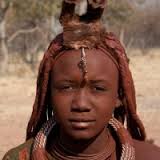 Catechist James Kalauma and I preach to white as well as native congregations in Luderitz, South Africa. Catechist James Kalauma had told me stories about his father's four wives, and the pagan home where he grew up. His confirmation had been a crucial point in his life. "My friends severely shook my family beliefs at my confirmation," he told me. They had jibed, "You seem no different from before!" Jarred by this criticism, he prayed that night for forgiveness and received a wonderful experience of new life in God. Later, James became our first Church Army officer from Namibia. After training in Nairobi, Kenya, he flew to America and, despite the odds against one with eighth-grade schooling, completed an MA degree. Returning home, the church ordained him, and in 1978 the wonderful news of his election as the Bishop of Damaraland came through. ✞
Bishop in Luderitz
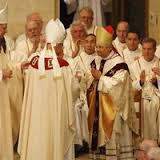 I wondered whether God had brought me to South Africa to help this one person flower in his ministry? What a glorious God who works across many thousands of miles to fulfill his will for you and me! Sometimes Bishop Mize sent me out on preaching missions alone, but the Bishop accompanied me on others. At one evening service in Luderitz, he sat directly behind me in the sanctuary as I finished addressing the congregation plus a large group of children at the front. As I sat down, the Bishop stood up from his throne and strode forward resplendent in cope and miter to the front of the church. Rapping his staff on the hard floor to make his point, he told us, "Everything the captain has said about the Christian faith is true! Believe it! Follow it!" ✞
Problems With Visas
With each crack of the steel tip, the children's eyes almost popped out of their heads! Captain Ray Lewis is filled with future doubts when he is refused a visa and called home to America. After only two months in South West Africa, the government did not renew my visa. I had to return to the States. The Church Army raised future doubts about the work in South West Africa. ✞
What People Think
Another problem I had to face returning home so quickly was what people thought of me. So many friends had sent me off so wonderfully to Africa, I hardly dared face them! "What could I say?" Then, a comforting letter arrived from a long-time friend named Dale Connor. "I would not worry what people will think when you return, Ray," he wrote. All of us have the problem that very often things don't turn out as we plan them. People understand, then quickly forget. Together our plans will become apparent, and the direction you are seeking will come from God. Trust Him, my friend, as you have taught me and so many others to do. ✞
Letter from James
Soon after I arrived home, I was for a time guest in one place that had given me a grand farewell when I left for Africa. Most of the church people, if a little surprised to see me back, were very gracious. They said, "Well, it is good to see you again!" My other great concern was not to discourage my friend and colleague, James Kalauma, who was then at the Church Army College in Kenya. I had written to tell him my reasons for remaining in America and was relieved to receive his reply. "Dear friend in Christ, I believe that this is God's own will. We are blessed because the Lord does not allow us to make mistakes. He is always showing us the right way to do his work. Praise Him for guiding! I am still praying that God will bring you back to South West Africa in His own right time. Your brother, James." ✞
"African Racial Tension"
by Ron Meacock © 2021
| ^Top Page | Next | Previous |