
| Next | Previous | Index | Tellout Home |
10. Unique Personal Names
Christian Names
 I have two unique personal names, "Ronald Henry," given to me by my parents after being born and later legitimized in the church at my baptism. I was given the middle name "Henry" after a king, as was the custom in my family as it also is for many English families. All the male children bear the middle name of a king of England like Arthur, Edward, or George. My surname, "Meacock," means "son of little Michael" and tells you about my family and, in my case, the particular place called Broughton outside Chester in England where these "sons of little Michael" originated. ✞
Henpecked Husband!
Interestingly, William Shakespeare describes a "meacock" in one of his plays as a "henpecked husband!". Samuel Butler wrote in 1759 in "Genuine Remains,", "The henpect Man rides behind his Wife, and lets her wear the Spurs and govern the Reins." "Meacock" was defined as "A meek, or spiritless man who dotes on his wife, or is henpecked." Using the shortened name "mea" rather than "Michael" indicates a short man. Interestingly, all the Meacocks originate in one tiny local district of Broughton, Chester, with about 6,000 in the 2011 Census. Most of the churchyard's gravestones are to "Meacock." I believe all the "Meacocks" in Canada, the USA, and Australia probably originate from this same place! ✞
Church Titles
 Churches also have unique names like my home church, "St. Catherine's," in the shipbuilding town of "Birkenhead." Saint Catherine (287-305 AD) was a princess and noted scholar. She was martyred in Alexandria, Egypt, on a burning wheel and later sainted. The firework is called the "Catherine Wheel," which spins around like a wheel when lit probable comes from St Catherine. Denominations also have unique names like "The Church of England," which tells you something about church history and my family's allegiance in the past. I was born in a place called "Birkenhead" in Cheshire, England. It had the first street tramway in Britain and the world's first tunnel called the Mersey Railway Tunnel beneath the tidal estuary of the River Mersey in 1886 AD. The name "Birkenhead" probably means "headland overgrown with birch." ✞
Country Names
Countries in the World have unique names, too like, "England," which takes its name from the "Angles," a Germanic tribe. The term "Canada" originates from a Saint-Lawrence Iroquoian word "Kanata" for "settlement," "village," or "land." Even the time I live in has the designation of the "Twenty-First Century." Each label tells us a little more about the context of our existence. Therefore, our names also describe our relationships with other people, to God, even to places and things. A name honors our accepted place in society, family, and even in a community of faith. ✞
God's Name Yahweh
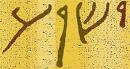 We may have unique names, but does God possess a special designation too? Strangely, God does! His name in Hebrew is "Yahweh." The vowel sounds are a little uncertain as Jews from 300 BC onward regarded the name for God as too sacred to be spoken and forgot the sounding. The closest we can get today is probably "Yahweh," which can also be rendered as "Jehovah" with different vowels. "Yahweh" means something like "I am, I was, I will be." This name reflects the eternal nature of the Infinite Creator God. The big question is, does God know my name? One young child in Connecticut thought she knew where God lived. She had her version of the Lord's Prayer beginning, "Our Father, who art in New Haven. How do you know my name?" ✞
Jesus' Name Revealed
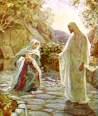 The significance of the personal name "Jesus" comes simply from the Hebrew "Yashua" or "Joshua," meaning "to deliver or to rescue." Jesus is, therefore, our rescuer or Savior, as was the leader Joshua in the Old Testament. Jesus reveals his resurrection body when he speaks to Mary Magdalene at the Garden Tomb. She thinks Jesus is the gardener! He is only recognized by Mary Magdalene when he tells her his name. This encounter indicates that the resurrected body will be spiritual and will be identifiable though perhaps not immediately. Jesus' resurrection body differs from his earthly body when he meets Mary Magdalene at the garden tomb. Jesus tells Mary in John 20.17, "Do not hold on to me, for I have not yet ascended to the Father." ✞
Jesus New Body
Later, when Jesus' body becomes "fixed," he walks through a wooden door to greet his disciples! In John 20.26, we read, "A week later his disciples were in the house again, and Thomas was with them. Though they locked the doors, Jesus came and stood among them and said, 'Peace be with you!'" Somehow, Jesus' molecules were miraculously able to pass through a solid panel, yet his skin is firm enough to be touched. He encourages 'Doubting Thomas' to touch his hands and side wounds to prove his identity. Another example of his new body is when Mary Magdalene, one of his closest friends during his ministry, doesn't recognize him in their garden tomb meeting. John 20.14-15 explains, "At this, she turned around and saw Jesus standing there, but she did not realize that it was Jesus. He asked her, 'Woman, why are you crying? Who is it you are looking for?' Thinking he was the gardener, she said, 'Sir, if you have carried him away, tell me where you have put him, and I will get him.'" ✞
Spoke Her Name
 Mary Magdalene only recognizes Jesus when he speaks her name. She twists around and says in the Aramaic language, "Rabboni," meaning "Teacher." Jesus and the disciples would usually use the simple Greek language of Palestine. God had not yet formed Jesus' resurrection body, so he whispers in John 20.17, "Do not hold on to me, for I have not yet ascended to the Father. Go instead to my brothers and tell them, 'I am ascending to my Father and your Father, to my God and your God.'" ✞
Special Name
Every young couple chooses unique and appropriate personal names for their children. There are many books of personal names from which to choose. Some people want a unique name for their child and will even go to the length of misspelling a common name like "Eric" and turning it into "Erikk" to make it stand out! The meaning of the first name can suggest the desired character or role of a person. "Ronald" means "leader" or "strong ruler." or from the Gaelic meaning "powerful." A placemat says, "he is easy going, and open-minded and likes to work hard. A man you can trust." I hope so. "John," on the other hand, means "a child of God," whereas "Matthew," says you are "a gift of the Lord." Unique personal names are important to God and my family and friends, and I hope you! ✞
Hosea's Children's Names
 The meaning of the Jezreel Hosea children's names also tells us of our relationships with one another, to God and Jesus. In the Hebrew Bible, "Hosea" or sometimes "Hoshea" is an 8th century BC prophet in Israel whose name means in Hebrew "Savior" or "Safety." God instructs Hosea as to what his children's titles are to be before they are even born. These names are to be living prophetic messages from God to Israel when the child is born. Their names are actual communications and not just intended for Hosea and the mother of his children. We read in Hosea 1.2-8, "When the Lord begins to speak through Hosea, the Lord said to him, 'Go, marry a promiscuous woman and have children with her, for like an adulterous wife this land is guilty of unfaithfulness to the Lord.'" ✞
Not My People
"So Hosea married Gomer, the daughter of Diblaim, and she conceived and bore him a son. Then the Lord said to Hosea, 'Call him Jezreel, because I will soon punish Jehu's house for the massacre at Jezreel, and I will put an end to the kingdom of Israel. On that day, I will break Israel's bow in the Valley of Jezreel.' Gomer conceived again and gave birth to a daughter. Then the Lord said to Hosea, 'Call her Lo-Ruhamah (which means "not loved"), for I will no longer show love to Israel, that I should at all forgive them. Yet I will show love to Judah, and I will save them — not by bow, sword, or battle, or by horses and horsemen, but I, the Lord their God, will save them.' After she had weaned "Lo-Ruhamah," Gomer had another son. Then the Lord said, 'Call him "Lo-Ammi" (which means "not my people"), for you are not my people, and I am not your God." ✞
Your I AM
Note here that the Hebrew for "your God" may also mean "your I AM," which has deep meanings as God's name in both the Old and New Testaments. The first of Hosea's children is a boy who is named "Jezreel," which comes from the Hebrew meaning "God scatters" or "God will sow." This name tells the people of Israel that God will scatter the nation as a sower scatters seed. Jezreel is also the name of an ancient Israelite city and fortress within the northern Kingdom of Israel. There, King Ahab and his wicked wife Jezebel had lived. The second child, a daughter, is named "Lo-Ruhamah," which may mean "not loved" or "not having obtained mercy" or "not pitied." It is a sign of God's displeasure with the people of Israel for following other pagan gods. It denotes the utterly ruined condition of the kingdom of Israel. The third of Hosea's children is a son who is called "Lo-Ammi." In God's sight, Israel is "not my people" any longer. ✞
Name of Christian
Hosea's children's names focus on Israel's people and signal that they have broken their relationship with God. God similarly tells another prophet called Isaiah in Isaiah 43.1b, "I have summoned you by name; you are mine." Like Isaiah, it is God who summons each of us by name and gives us our designations. Later, the Savior offers believers the particular title of "Christian" and indwells them so that they are now appropriately called "those in whom Christ dwells." The term "Christian" appears in Acts 11.26, where it says, "So for a whole year Barnabas and Saul met with the church and taught great numbers of people. The disciples were called Christians first at Antioch." Saint Paul asserts in 2 Corinthians 13.5, "Examine yourselves to see whether you are in the faith; test yourselves. Do you not realize that Christ Jesus is in you — unless, of course, you fail the test?" God grant that we may not "fail the test" and that we may live up to our name of "Christian!" ✞
Heavenly Father's Name
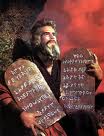 Understanding the Heavenly Father's name brings abundant blessings to Christians and reinforces their understanding of Jesus' deity. The Heavenly Father's name almost always appears all in capitals as LORD in English. But the Hebrew is pronounced something like "Yahweh" and is built on the word for "I am." In Exodus 3.14, God the Heavenly Father tells Moses, who asked what the Lord's name is, " 'I am who I am.' Say to the Israelites, 'I am sent me to you.'" ✞
The I Am Name
The phrase "I am" may indicate a future or past tense. The LORD, however, does not have a beginning and will not have an end! The "I am" may mean, " 'I was what I was,' or 'I will be what I will be.'" The verb "to be" expresses the eternal nature of God the Father and his continuous presence with us in the past, present, and future. The New International Version Commentary suggests, "When God speaks of himself he says 'I am,' and when we speak of him we say, 'He is.'" ✞
Father's Great Blessing
 During Jesus' ministry, the crowds are very curious about who he is and so press him with the question, "Who are you?" Jesus responds strangely in John 8.58, "Before Abraham was born, I am." Here he purposely uses the holy "I AM" name used by God himself to Moses all those years before. As a result, John 8.59, "at this, they picked up stones to stone him." The crowd knew he implied that he was claiming to be God himself by using the Heavenly Father's name. ✞
Crowd's Hostile Reaction
The reason for the crowd's hostile reaction to Jesus is recorded in John 10.33, "We are not stoning you for any of these good works, but for blasphemy, because you, a mere man, claim to be God." Later, Jesus links his name with his Heavenly Father's name, saying in John 10.31-38, "The Father is in me, and I in the Father." These deity claims once more prompt a hostile reaction so that in the next verse, John 10.39, we read, "again they tried to seize him, but he escaped their grasp." ✞
Jesus' Powerful Name
 Jesus' mighty name causes many mature and hardened soldiers to fall to the ground when Jesus says, 'I am.' The Temple guards come to arrest Jesus in the Garden of Gethsemane or "Gethsemani." This place-name comes from the Classical Syriac "Gad Smane." In Hebrew, "Gat Shmanim" literally means "oil press." Gethsemane was an urban garden dotted with olive trees at the Mount of Olives' foot opposite Jerusalem. It is popular with tourists to the Holy Land to this day. Eight ancient olive trees that grow on the garden's Latin side are maybe 900 years old! ✞
Mount of Olives
According to Luke 22.42-44, the "Mount of Olives" and the "Garden of Gethsemane" are well known to Jesus and Judas, who betrayed him there. The actual location where Jesus prays on the night that Judas betrays him has four or five alternatives. The most popular is the site of "Church of All Nations," the second near the "Tomb of the Virgin Mary" to the North, the third to the East which is the Greek Orthodox location, and fourth is the Russian Orthodox orchard next to the "Church of Maria Magdalene," The American author William McClure Thomson (1806-1894), in "The Land and the Book" of 1888, suggested that the Garden of Gethsemane was "a secluded vale several hundred yards to the North East." ✞
I Am Names
 When Jesus arrives at the Mount of Olives, he asks the guards whom they are seeking, and they answer, "Jesus of Nazareth." Jesus replies, "I am he." John 18.5-6 records that "When Jesus said, 'I am he,' they drew back and fell to the ground." A detachment of hardened soldiers and police from the Chief Priests and the Pharisees falls over when Jesus uttered his powerful "I am" name! The holy name of God on the lips of Jesus has a sacred punch in itself. ✞
Aspects of Divinity
All names beginning "I am" in the Gospels bear witness to Jesus' mighty name and describe different aspects of his divinity. For example, Jesus says, "I am the good shepherd," indicating he will lead his sheep just as his Heavenly Father would. Jesus also said, "I am the bread of life," so that his disciples would know that he would spiritually nourish them just like the Heavenly Father did the people of Israel with manna in the wilderness. Jesus also told his followers, "I am the way, the truth and the light" and "the resurrection and the life." Though not immediately apparent to us, the Jews who heard discerned Jesus' mighty name. They know that he is claiming to be God himself and have the Almighty's power and authority. ✞
"Unique Personal Names"
by Ron Meacock © 2021
| ^Top Page | Next | Previous |