
| Next | Previous | Index | Tellout Home |
79. Jerusalem City Cube
Revelation 21.15-21
"The angel who talked with me had a golden measuring rod to measure the city, gates, and walls. The city was laid out like a square, as long as it was wide. He measured the city with the rod, a Greek unit of measurement, and found it 1,500 miles long and as wide and high as it is long. The angel measured the wall using human measurement, and it was 200 feet thick. The wall was of jasper, and the city of pure gold, like pure glass. Jerusalem's foundation walls held precious stones. The pure gold streets and the city's twelve pearl gates described all their beauty. Every kind of precious stone decorated the city walls' foundations. The twelve foundation stones were jasper, sapphire, chalcedony, emerald, sardonyx, and carnelian. Then, there were chrysolite, beryl, topaz, chrysoprase, jacinth, and amethyst. A single pearl formed each of the twelve gates. The city's great street was of pure gold, like transparent glass." (Revelation 21.15-21) ✞
City Cube Size
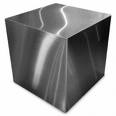 The Jerusalem city cube has four equal sides of the same height, width, and breadth. Revelation 21.16 describes it as about 1,500 miles long, an unimaginably vast building that would cover three-quarters of North America! A "stade" was the distance covered in the original Greek foot races of about 600 feet or about one-tenth of a modern mile. Revelation 21.15 pictures the angel with a "golden measuring rod." Such a measuring stick was first described in Ezekiel 40.2-3, "In God's visions he took me to Israel and set me on a very high mountain, on whose south side were some buildings like a city. There, I saw a man whose appearance was like bronze. He was standing in the gateway with a linen cord and a measuring rod in his hand." ✞
Five Platonic Solids
Square city plans were typical in ancient times. Babylon, the Tower of Babel, and Nineveh were all built in a geometrical square form. But the New Jerusalem city cube is not only square but also of the same height. Wikipedia explains, "In geometry, a cube is a three-dimensional solid object bounded by six square faces, facets or sides, with three meetings at each vertex. The cube is the only regular hexahedron and is one of the five Platonic solids." Each Platonic solids, named after the ancient Greek philosopher Plato (c428-c348 BC), has many faces. These are the only five solids having the same number of faces meeting at each vertex. Strangely, many viruses, such as the herpes virus, have a similar configuration with twenty triangular faces! Nature exhibits many such structures. The Jerusalem city cube has six faces, twelve edges, and eight vertices and symbolizes perfection. ✞
Foursquare Man
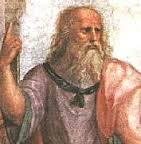 Plato (c428-c348 BC) and Aristotle (384-322 BC) were classical Greek philosophers who wrote that a man who was considered perfect was called "foursquare." It is perhaps surprising in our modern context because "foursquare" also describes "the location-based social networking website for mobile devices such as smartphones." It is a local search-and-discovery mobile app. It provides personalized recommendations of places to go near the user's current location. The New Jerusalem is also "foursquare!" or "absolutely perfect." ✞
Cubic Temple Items
 The burnt offering altar and the incense altar are also perfect cubes. The High Priest's breastplate or "hoshen" produced from embroidered linen is a square two layers thick with four rows of three engraved gems embedded in a golden setting. Again and again, the cube shape occurs in Ezekiel's New Jerusalem visions. Most importantly, in Solomon's Temple, the Holy of Holies itself is a perfect cube. John of Patmos intends us to realize that the whole of New Jerusalem's city cube is to be one great Holy of Holies, God's future dwelling-place for followers of Christ. ✞
City Wall
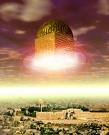 The angel measures Jerusalem's city wall at 266 feet thick! Each side is twelve thousand "stades." According to Professor William Barclay (1907-1978), "'Twelve thousand stades' is nearly 1,500 miles, and the city's total area is 2,250,000 square miles. By comparison, the Old City of Jerusalem's walls rebuilt by Sultan Suleiman 1 between 1537 and 1541 AD were 12,000 feet long (2.4966 miles), their height was 39 feet, and they were over 8 feet thick. Even this is very impressive! Rabbis may dream of the re-created Jerusalem, but the city wall reaching Damascus and a city covering Palestine far exceeded even their greatest expectations! A city 1,200 stades long with the Revelation's area and dimensions would stretch from London to New York! ✞
Bring People In
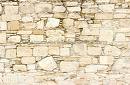 The New Jerusalem city wall will be 266 feet thick. In an alternative translation, "thick" is presented as "high," which is not very tall by modern standards or even building standards of the period. Ancient Babylon's wall, for example, was 300 feet tall, and the walls of the porch of Solomon's temple built in 832 BC, also known as Jerusalem's first temple, were 180 feet high. If the 144 cubits describe the Jerusalem city wall's thickness, it would be massive. The wall, however, cannot be for defense, for all hostile beings, spiritual and human, are obliterated or cast into the Lake of Fire. It must be only for the wall's structural strength. It illustrates that God is more eager to bring people in than to shut them out, and his church must be the same! In the holy city, there is room for everyone! ✞
Twelve Pearl Gates
The city's measurements describe a place that will hold all God's people and be perfect. There are twelve gates, like twelve pearls. The precious stones' variety and measurements are twelve and multiples of twelve, symbolizing God's people. The walls are one hundred and forty-four cubits or a massive two hundred plus feet thick. Twelve foundations support the walls, and twelve gates open into the city. God names these after Israel's twelve tribes and the twelve Apostle leaders. ✞
Jerusalem's Precious Stones
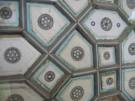 The New Jerusalem precious stones in the foundation walls display incredible beauty and purity that will last forever. Some of these precious stones' precise identification is uncertain, but even so, they must have been stunning to John of Patmos. The gold and precious stones symbolize the church's beauty and excellence. Jerusalem will be the only worship place as the centerpiece of God's earthly presence. However, the new city will need no temple because God's presence will be everywhere. Nothing will hinder us from being with him nor from worshipping him. There will be no sun for light, for the Lord God himself, and the Lamb will be its light. ✞
"Jerusalem City Cube"
by Ron Meacock © 2021
| ^Top Page | Next | Previous |