| Next | Previous | Index | Tellout Home |
76. Great White Throne
Revelation 20.11-15
"Then I saw a great white throne and him who was seated on it. The earth and heavens fled from his presence, and there was no place for them. And I saw the dead, great and small, standing before the throne, and the books opened. Another book opened, which was the book of life. God judged the dead according to what they had done as recorded in the books. The sea gave up the dead in it, and death and Hades gave up the dead in them, and each person judged according to what he had done. The lake of fire is the second death. Anyone without their name written in the book of life ended up in the lake of fire." (Revelation 20.11-15) ✞
Judgment Seat
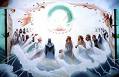 Here we read of the final judgment and see God, the judge on the great white throne. The throne's whiteness symbolizes God's unapproachable purity. In verse eleven, the word "heavens" may mean "sky," which gives us "the earth and sky fled from God's presence." The New Testament portrays the judge as Jesus Christ himself in John 5.22, where Jesus says, "the Father judges no one, but has entrusted all judgment to the Son." The concept of "Christ's Judgement Seat" or "Bema Seat" comes from the ancient Athens' Olympics, where a judge sat on the "Bema Seat," which also can mean "platform or step" at the finish line of the races. The judge's purpose was to determine what position the runners finished, whether first, second, or so on, and then give out the appropriate rewards. In Ancient Athens, a "bema" was an elevated platform used as an orator's podium. "Bema" was also a place of judgment being the extension of the raised seat of the judge. Today, the term could describe the raised area in a church sanctuary. In this Revelation 20 passage, John sees a "great white throne and him who was seated on it." In Jewish synagogues, the term "bimah" describes where they read the Torah during the services. The Bema Seat is probably the equivalent to our pulpit today, from which the preacher addresses a congregation. I remember an unusual pulpit in a church on Streatham Road in South London, England. Once William Wilberforce's church (1759-1833), the great slave trade abolitionist, was unique in having a door from the pulpit leading outside. When the inside sermon was over, the preacher stepped through the door and repeated it to the crowds outside! The writer and socialite Madame de Staël described Wilberforce as the "wittiest man in England." According to Georgiana, Duchess of Devonshire, the Prince of Wales said he would go anywhere to hear Wilberforce sing. ✞
Judge Jesus
 The judge is the glorified Christ himself in the sheep and goats parable. Jesus says in Matthew 25.31-32, "When the glorious Son of Man comes, with all the angels, he will sit on his glorious throne. All the nations will gather before him, and he will separate people one from another as a shepherd separates sheep from goats." In the Apostle Paul's Athens speech in Acts 17.31, he announces that God has appointed a day in which Jesus will judge the world. Saint Paul writes, "For he has set a day when he will judge the world with justice by the man he has appointed. He has proved this to everyone by raising Jesus from the dead." Saint Paul also describes Judge Jesus in 2 Timothy 4.1a, "in the presence of God and of Christ Jesus, who will judge the living and the dead." ✞
Jesus Equals God
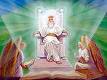 The Father and Son's unity in the Trinity is such that there is no difficulty ascribing one's action to another. Paul can therefore write in Romans 14.10b, "we will all stand before God's judgment seat," and in 2 Corinthians 5.10, "We must all appear before the judgment seat of Christ." Here the titles "Christ" and "God" seem to be interchangeable. ✞
Heavens Pass Away
 The heavens will vanish, and the earth will pass away when the Lord comes in his glory and majesty. "The heavens fled" may mean "the sky fled." John of Patmos says that the earth passes away as the judgment begins. God casts away the world and sky as Psalm 102.25-26 asserts, "In the beginning, you laid the earth's foundations, and the heavens are your hand's work. They will perish, but you remain. They will all wear out like a garment. Like clothing, you will change and discard them. But you remain the same, and your years will never end." ✞
The Old Earth Passes Away
Isaiah 51.6 repeats the prediction, "lift your eyes to the heavens, look at the earth beneath. The heavens will vanish like smoke, the earth will wear out like a garment, and its inhabitants die like flies. But my salvation will last forever. My righteousness will never fail." Jesus himself prophesies in Mark 13.31, "heaven and earth will pass away, but my words will never pass away." And Saint Peter in 2 Peter 3.10 confirms, "but the Lord's day will come like a thief. The heavens will disappear with a roar; the fire will destroy the elements, and the earth and everything in it will be laid bare." Some manuscripts read "be burned up" instead of "be laid bare." The old earth must pass away, and the heavens must vanish because Christ's new people must have a new world! ✞
Two Kinds of Books
Two kinds of books appear in Revelation. The second book, the Lamb's Book of Life, cancels out the first, the Judgment Book! Jesus Christ opens the judgment book, and he judges the dead according to what they have done. The first contains a record of every person's deeds, which is a common scriptural idea. Daniel 7.10b tells of a dream, "The court was seated, and the books opened." The judgment begins. "Christ's Judgment Seat" in 1 Corinthians 3.12-15 describes what people have done for Christ or not. "If any man builds on this foundation using gold, silver, costly stones, wood, hay, or straw, his work will appear for what it is because the day will reveal it. Testing with fire will indicate each person's work quality. If what they have built survives, they will receive his reward. If it burns up, they will suffer loss. They will survive, but only as they escape through the flames." The dead stand before heaven's throne, with the great books open before them, for God keeps a record of all our deeds. We are writing our destiny all through life. It is not so much that God judges a person as a person writes his judgment by what they do or not. The open Judgment Book, called the "Book of Life," represents God's judgment. Doing does not save us but counts as clear evidence of a person's relationship with God in Christ. The Book of Life contains the names of Christians only. Revelation 13.8 reads, "All of earth's inhabitants whose those names not written in the Lamb's Book of Life, the Lamb slain from the world's creation, will worship the beast." Every person, both wealthy, poor, great, or minor, is judged. No one is too important nor too insignificant to escape God's judgment. ✞
Book of Life
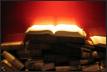 The Book of Life opens. In Exodus 32.32, Moses says to God, "But now, please forgive their sin, but if not, then blot me out of the book you have written." Moses is willing to be blotted out of the Book of Life if that will save his people. Psalm 69.28 adds the curse, "May they be blotted out of the book of life and not listed with the righteous." In Isaiah 4.3, the prophet writes, "Those left in Zion, who remain in Jerusalem, recorded among the living in Jerusalem, will be called holy." Saint Paul speaks in Philippians 4.3 of his fellow laborers whose names are in the Book of Life. He writes, "Yes, and I ask you, my true companion, help these women since they have contended at my side in the gospel's cause, along with Clement and the rest of my co-workers, whose names are in the book of life." The risen Christ's promise to the Sardis Church is to reward those who overcome when he opens the Book of Life. He will destroy those whose names The Book of Life does not contain. An interesting side note is that every ruler in those days controlled a "living citizens' register." When a person died, the ruler erased their name. Colin J Hemer (1930-1987) refers to one particular custom in ancient Athens, whereby civic registers removed condemned criminals' listings at their execution. The Greek word translated "erase" is "obliterate." The Book of Life contains living, active citizens of God's kingdom. ✞
Christian Grave Site
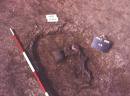 Anyone not named in the "Book of Life" ends up in the Revelation lake of fire, the second death. On Judgment Day, the sea will give up its dead. In the ancient world, burial was considered more important to individuals than in today's society. The Early Church felt that Christian burial was so essential they purchased plots for their members who could not afford them. These were the only possessions of the early church! Today's Protestant and Catholic churches generally allow cremation, although the Eastern Orthodox Church still insists on burial, which is technically called "inhumation." We would be wise to compare the churches' possessions today with the Early Church's burial sites. Do we own burial plots for those of our number who cannot afford them? No way! Most Christian denominations possess huge buildings, large bank accounts with stocks and bonds, and silver and valuable gold items! What a disgrace and a waste! People believed until recently that a person's spirit wandered homelessly and hopelessly for three days without burial. Loved ones could not bury those drowned at sea, but God will raise them on the last day. Revelation 20.13 reads, "The sea gave up the dead in it, and death and Hades gave up the dead in them, and each person judged according to what they had done." ✞
Accidents of Death
 John of Patmos points out here that even those who die at sea or have no grave at all will appear before God's judgment seat. The Biblical scholar H. B. Swete (1835-1917) comments on this passage, "The accidents of death will not prevent any from appearing before the judge." No matter how a person dies, God judges them, and they will not escape their punishment or lose their reward. Only those who place their faith in Jesus Christ have their names recorded in the "Book of Life" and spared the Revelation lake of fire. John of Patmos's vision does not permit any gray areas in God's judgment. If we have not identified with Christ on earth, confessing him as our Lord, there is no hope, no second chance, no other appeal. Finally, God throws Death and Hades into the lake of fire. As H. B. Swete says, "These voracious monsters who have themselves devoured so many are themselves destroyed in the end." ✞
Lake of Fire
Interestingly, Christians and many other religions consider the "lake of fire" a place of destruction for the afterlife wicked. "The Lake of Fire" is related to the Jewish "Gehenna," a valley outside Jerusalem where garbage continuously burned in Jesus' day and the fires never went out. But for those whose names are in the Book of Life, death is forever vanquished. ✞
"Great White Throne"
by Ron Meacock © 2021
| ^Top Page | Next | Previous |