
| Next | Previous | Index | Tellout Home |
28. Black Horse Apocalypse
Revelation 6.5-8
"When the Lamb opened the third seal, I heard the third living creature say, 'Come!' I looked, and there before me was a black horse! Its rider was holding a pair of scales in his hand. Then I heard what sounded like a voice among the four living creatures, saying, 'Two pounds of wheat or six pounds of barley for a day's wages, and do not damage the oil and the wine!' When the Lamb opened the fourth seal, I heard the fourth living creature's voice say, 'Come!' I looked, and there before me was a pale horse! Its rider was named "Death," and "Hades" was following close behind him. They received power over a quarter of the earth to kill by sword, famine, plague, and by the earth's wild beasts." (Revelation 6.5-8) ✞
Roman Famines and Plagues
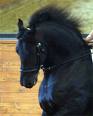 The black horseman carrying a pair of scales in his hand symbolize severe famine. The scales weighed bread during shortages when ordinary people could only afford a part of a loaf. Following a war in antiquity, famine inevitably resulted, which in turn created devastation. Plagues became the scourge in many parts of the ancient world and often resulted in the death of half or three-quarters of the population. The first recorded famine by Livy (BC 59-17 AD), the Roman historian in the "Founding of the City 4.12," was in Rome in BC 441. Between BC 400 and 800 AD, Rome's population fell by over 90% through famine and plague! Nine of every ten people died! ✞
Black Death
In Emperor Nero's time (37-68 AD), severe famines savaged the poor, but the rich's luxuries and "the oil and the wine" remained untouched. These were carefully rationed and protected from inflation and were readily available to the wealthy elite. Because of famines and destruction, wheat was short but still available but at prohibitive prices. Because of its connection to starvation, the color black became a sign of death. The "black death" was a bubonic plague pandemic from 1346 to 1353 AD. It caused the demise of 75-200 million people in Europe and North Africa and came after the Great Famine of 1315-1317 AD. Compare this with the 5 million people who have died thus far in the world from the Coronavirus plague in 2019-2021. It is still a terrible toll on any population and represents fathers, mothers, children, friends, and colleagues. The term "black death" probably comes from the sufferer's trademark black gangrene finger and black swellings of the lymph nodes due to infection. Even today, black is still the standard mourning and funereal color. The black horse and its rider are death bringers. ✞
Weighing Bread
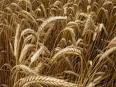 The three main crops in the Roman Empire were "corn, wine, and oil." The black horse apocalypse rider has a pair of scales and a balance cross-beam in his hand. In the Old Testament, "eat bread by weight" indicated a significant society bread shortage. Ezekiel 4.16 reads, "He then said to me: 'Son of man, I am about to cut off Jerusalem's food supply. The people will anxiously eat rationed food and despairingly drink rationed water.'" A voice from the four living creatures dictated the prices of bread, barley, corn, and wine. A day's wage was in Greek coinage, "a denarius," and would buy six pounds of barley. The bread was an essential staple from flour or barley dough, salt, and water. Leviticus 26.26 described the famine shortages as God's punishment for disobedience, "When I cut off your bread supply, ten women will bake your bread in one oven, and they will dole out the bread by weight. You will eat, but you will not be satisfied." Starvation and lack of good bread were significant threats in those times, bringing dread and dismay. ✞
Deeply Rooted Plants
 Wealthy people, however, could buy wine and olive oil even when there was no corn. The olive tree and the grapevine were much more deeply rooted than corn and reached deeper groundwater. "Corn was a cereal crop and not the North American maze." Olive tree groves and vineyards could stand a much harsher drought than the corn crop. When Jacob sent a plea to Egypt for corn in Joseph's time, there was still an abundance of food delicacies. Genesis 43.11 reads, "Then their father Israel said to them, 'If it must be, then do this, place some of the best land products in your bags and take them down to the man as a gift — a little balm and a little honey, some spices, myrrh, some pistachio nuts, and almonds.'" Wine and oil, and other delicacies were plentiful, but corn was prohibitively expensive. The necessities of life were scarce. ✞
Wheat Flour Measure
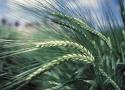 The four living creatures announced a reduced wheat flour measure for a day's labor. It was now not sufficient for an ordinary family. This statement came from the voice among "the four living creatures," emphasizing the importance of prized necessities. It showed how vital the price of food was to God as well as the people. Two pounds of wheat flour or six pounds of the cheaper coarse barley flour cost one denarius in shortage times. The Greek word for "a day's wages" is "denarius." equivalent to $80 today. The denarius was a small silver coin first minted in BC 211. Usually, one denarius bought from eight to sixteen wheat flour measures three or four times in barley. In his vision, John of Patmos emphasized that food was so expensive that a man needed a working wage to buy enough for himself. Nothing remained for any other life necessities for his wife or children, a desperate situation for any family man. Hardships caused widespread famines and subsequent riots, yet Revelation's four living creatures show concern for these life and death problems. ✞
Four Drachma Coin
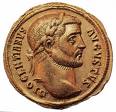 Jesus also mentioned the denarius to Saint Peter as a tax payment. He told Peter in Matthew 17.27, "But so that we may not offend, go to the lake and throw out your line. Take the first fish you catch; open its mouth, and you will find a four drachma coin. Take it and give it to them for my tax and yours." A four drachma coin was worth four denarii in Palestine. Traditionally thought to be a tilapia, or "St. Peter's Fish," the fish is still available on restaurant menus today! A pay packet was essential for Rome's working people to buy bread and pay their taxes! Grain and the denarius' value determined a family's continued existence. The black horse apocalypse and scales were disaster omens for ordinary people. ✞
Alexandrian Corn Ships
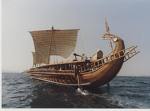 The people's desperation for food boiled over when an Alexandria corn ship arrived from Puteoli. Puteoli (now "Pozzuoli") was the fleet's central hub, 170 miles away in Alexandria. It was an important shipping center for all kinds of goods from Egypt and other exotic places bound for Rome. The vessels delivered goods to the Ostia port for nearby Rome. Silt eventually closed off Ostia inland, but its merchant's streets and beautiful decorated mosaic tile floors remain. The arrival in Ostia of an Alexandria corn ship in a severe famine created a riot. The vessel, however, brought no food but only games' sand which workers spread in the Coliseum to soak up any spilled blood! The starving populace thought the ship contained corn, for corn ships typically came from ancient Alexandria. The people rioted when they found the ship's cargo was only sand. Although John of Patmos described famine's black horse preceding the end, he envisioned scenes of coming food shortages. ✞
Emperor Domitian's Edict
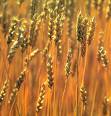 In 92 AD, Emperor Domitian issued a vine proclamation, banning new vineyard planting in "Roman Italy." Emperor Domitian's edict made corn, barley, and wine scarce in the Roman Empire. It caused great hardship for the poor. As a result of this, an area was officially given the Latin name "Italia," uniting the Italian Peninsula under the same name and government. Domitian (51-96 AD) was Emperor for fifteen years, one of the most prolonged rules. Domitian was a cruel, paranoid tyrant whose proclamation ordered the uprooting of half the Roman provinces' existing vineyards. ✞
Control Taxation
This so-called wine proclamation was an attempt to control taxation and to encourage farmers to grow more cereals. It occurred at the same time as John of Patmos was writing Revelation from his Island cave. Grain was short at that time, but there was also an abundance of wine! Revelation 6 reflected starvation and death in John of Patmos's day. However, Domitian's edict had the opposite effect than intended as it caused a provincial rebellion in Asia. The vineyards were one of their principal revenue sources. Because of this hostile reaction, Emperor Domitian rescinded the law and ordered the prosecution of anyone who stopped cultivating their vineyards! Corn became very scarce. Interference in the Emperor's wine supply was forbidden, further protecting the wine and oil prices and indirectly the bread price. ✞
Pale Horse Apocalypse
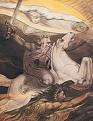 The fourth seal's opening reveals Revelation's "pale horse," the last of the "Four Apocalypse Horsemen." Revelation's pale horse represented the coming of death, Hell, famine and left people white with fear. "Pale" was a person's face color when they were terrified or about to die. It described the dead's ashen appearance and came to symbolize death itself. The rider of the "pale horse" was the only horseman named "Death" and "Hades." Death is itself accompanied by Hades as his companion. Hades is the equivalent of the Hebrew "Sheol" and the "place of departed souls," also known as "hell." In Revelation 1.18, Jesus says to John of Patmos, "I am the Living One; I was dead, and behold I am alive forever and ever! And I hold the keys of Death and Hades." The pale horse and its rider caused a scarcity of food, a terrible famine, and Hades and Death's domain upon the earth, but Jesus himself holds the keys to them. ✞
"Black Horse Apocalypse"
by Ron Meacock © 2021
| ^Top Page | Next | Previous |