| Next | Previous | Index | Tellout Home |
17. Philadelphia Endures Patiently
Revelation 3.9-13
"I will make those who are of Satan's synagogue, who claim to be Jewish though they are not but are liars, come and fall at your feet and acknowledge that I have loved you. Since you have kept the command to endure patiently, I will also keep you from the hour of trial that will come upon the whole world to test those living on the earth. I am coming soon. Hold on to what you have so that no one will take your crown. I will make the victorious one a pillar in my God's temple. Never again will they leave it. I will write on them God's name and the name of God's city, New Jerusalem, which is coming down out of heaven from my God, and I will also write on them my new name. Whoever has ears, let them hear what the Spirit says to the churches." (Revelation 3.9-13) ✞
Christ's Patience
 To this point, Philadelphia has endured patiently. The comment, "you have kept my command," describes one definite past act. The implication is that the Philadelphian Church has triumphantly emerged from a trial. They may have only a little strength, and their resources may be small, but if they endure patiently, they will see Christ's triumphal dawn. ✞
Jesus' Command
 "My command to endure patiently" may not refer to Jesus' command to the Philadelphian Church about patience but to the example of Christ's patient endurance. God doesn't expect us all to act the same, but he does require us to "hold on" to what we have and persevere in using our resources for him. Jesus commends the Philadelphians for their obedience and endurance with whatever strength they have. To keep Jesus' command is to endure despite opposition to the end. Revelation chapter 3 promises that those who obey Jesus' directions will be "kept safe by him." "You have kept My command to endure patiently," he says, "therefore, I will keep you." Loyalty has its sure reward. The phrase "my command to endure" refers to those who practice the same kind of endurance as Jesus showed in his earthly life and ministry. ✞
Things Jesus Supplies
 When Jesus Christ calls upon us, he supplies us with three things to keep his commandments. These are his example, his inspiration, and his endurance. We must walk looking to him as our example as in Hebrews 12.1-2, "Therefore, since such a great witness cloud surrounds us, let us throw off every hindrance and the sin that so easily entangles. Let us determinedly run the race marked out for us, fixing our eyes on Jesus, the pioneer and faith perfecter. For the joy set before him, he endured the cross, scorning its shame, and sat down at the right hand of God's throne." Jesus' suffering inspires us according to Hebrews 2.18, "Because he suffered when tempted, he can help the tested." With his example, inspiration, and endurance, we can endure to the end. ✞
Christ's coming
 Revelation tells us that Christ is coming soon. The ancient Philadelphians were greatly encouraged and would not allow anyone to take their crown. They would be rewarded for their faithfulness when Christ returns. This theme of "coming soon" is repeated in Revelation 1.1 where John of Patmos writes, "Jesus Christ's revelation, which God gave him to show to his servants the things that must soon take place." Revelation 22.7 repeats the phrase, "Look, I am coming soon!" In Revelation 22.12 and Revelation 22.20, Jesus re-emphasizes this concept. Christ's return will judge Ephesus, Pergamum, and Sardis' evil ways. Until Christ comes again, God warns the Christian Church in Philadelphia to hold on and be patient in adversity. The risen Christ tells them that he is coming quickly. His words warn the heedless and comfort the oppressed. James 5.8 comments, "You too, be patient and stand firm, because the Lord is near." Jesus urges patient endurance, and then their distress will end. ✞
Take Your Crown
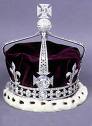 The risen Christ asks the Philadelphians to hold on to what they have, that no one may "take your crown." It is not a question of someone stealing it but of God taking it from them and giving it to someone else because they are not worthy to wear it. ✞
Jerusalem Temple Pillars
 Jesus Christ's faithful followers will become strong support members with God's name inscribed on them. The promises of the risen Christ will come to those who are faithful. "Pillar Tombs" in the ancient Greek city of Lycia in Anatolia today are monumental graves featuring a single pillar made of stone. They will be like the Jerusalem Temple pillars formerly situated on the Temple Mount. ✞
Boaz and Jachin
Solomon's temple had two copper, brass, and bronze pillars named "Boaz" and "Jachin." In St Peter's Church in Rome, there is a structure with four twisted and elaborately decorated spiral Solomonic columns believed to have come from the Solomon's Jerusalem Temple and placed in Old Saint Peter's Basilica by Emperor Constantine 1 (274-337 AD.) Those columns stood for a thousand years as part of the Old St. Peters and are today built into the supports of the church across from Bernini's Baldacchino. Peter, James, and John in Galatians 2.9-10 are called pillars in Jerusalem's Early Church by Saint Paul. He writes, "James, Cephas, and John, those esteemed as pillars, gave Barnabas and me the right hand of fellowship when they recognized the grace given to me." The Patriarch Abraham said that the Jewish Rabbis "were the world's pillars." ✞
Pillars in God's Temple
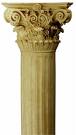 In Asia Minor cities and Philadelphia, when a Jewish priest died after a lifetime of faithful service, he was honored by a new pillar erected in the synagogue he served. The synagogue inscribed "his name" and his father's name upon it. For Christians, this describes Christ's lasting honor to his faithful ones by giving them forever a particular characteristic of Jesus. Jesus already knows our unique personal names. The one who is victorious in New Jerusalem becomes a pillar in the Jerusalem Temple. God will write their Christian name and the name of God's city on each one of them. ✞
Special Blessing
When God told Moses about the blessing Aaron and the priests are to pronounce over the people, he said in Numbers 6.27, "So they will put my name on the Israelites, and I will bless them." In Revelation 3.12-13, it is the same idea. It is as if Jesus himself is to write Christian names upon Israel so that all may know that they are Jesus Christ's people. Faithful Jewish people also have a special place, I believe, in New Jerusalem. The faithful one will, in the end, become like "a pillar fixed in God's Temple." We will live a life of untroubled peace when we reach God's eternal presence after the battles of earth. Then will the names of the faithful be inscribed on the pillars in New Jerusalem. ✞
Jesus' Revelation Names
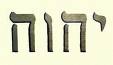 Some authors have counted as many as 37 names for Jesus in the Book of Revelation. We can start from memory with Jesus Christ (1.1), the Alpha and Omega (1.8-13), and maybe remember the Lion of the tribe of Judah (5.5,9). Others like the Bright and Morning Star (22.16) and the White Horse Rider (19.11) may not so readily come to mind. Here is the NIV list of all 37 names for Jesus in Revelation. ✞
Names For Jesus
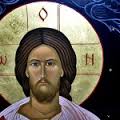 The Revelation name "Jesus" is written upon the pillars in the New Jerusalem Temple. The supports also commemorate renowned temple priests. A printout of the original list of 36 names for Jesus in Revelation exists at "2013 A Virtuous Woman.org."
1. Jesus Christ 1.1
2. Faithful Witness 1.5
3. First Born of the Dead 1.5
4. Ruler of the Earth's Kings 1.5
5. Alpha and The Omega 1.8
6. Who Is, and Was, and Is to Come 1.8
7. Almighty 1.8
8. Son of Man 1.13
9. Who Lives and was Dead 1.13, 18
10. Who Holds the Seven Stars 2.1
11. Who Walks Among the Seven Golden Candlesticks 2.1
12. Has the Sharp Double-Edged Sword 2.12
13. God's Son 2.18
14. Searches Hearts and Minds 2.23
15. Holds the Seven Spirits of God 3.1
16. Holds the Seven Stars 3.1
17. Holy and True 3.7. ✞
More Names
18. Key of David 3.7
19. Opens and None Can Shut 3.7
20. Shuts and None Can Open 3.7
21. Amen 3.14
22. Faithful and True Witness 3.14
23. Ruler of God's Creation 3.14
24. Lord 4.11
25. Lion of the tribe of Judah 5.5,9
26. Root of David 5.5,9
27. Slain Lamb 5.6,7
28. Lamb 5.8,9
29. Lord of Lords 17.14
30. King of Kings 17.14
31. Faithful and True 19.11
32. Rider of the White Horse 19.11
33. Word of God 19.13-16
34. Christ 20.4
35. Lord God who Inspires the Prophet 22.6
36. Beginning and the End 22.13
37. Bright and Morning Star 22.16. ✞
Which New Name?
When Jesus says they will have "my new name written upon them," I don't know which one of the 37 names he means! All would see that they belong to Him. They are citizens or pillars of the New Jerusalem, and they have a Revelation name for Jesus marked upon them. ✞
God's Eternal City
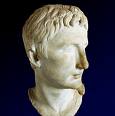 On the faithful Christian, "the name of my God's city, New Jerusalem," is to be written. This name stands for the gift of citizenship in God's eternal city, coming down from heaven. The people of Philadelphia, "the city of brotherly love," knew all about taking a new name. In 17 AD, a terrible earthquake devastated their homes. Emperor Tiberius dealt kindly with them, remitted their taxes, and gave them a generous gift to rebuild. In response, the city granted honors to Tiberius by naming the town "Tiberias" after him on the Sea of Galilee's western shore. Tourists still come to the p-resent day Tiberias, the largest city in Galilee, to enjoy its hot springs and mineral baths. I still remember lounging in the warm mineral bath water at sunset on my holiday there. ✞
Neo-Caesarea
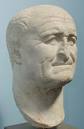 Cities named buildings, streets, even the town itself after people who had endowed it in some unique way. The people of Philadelphia called their town "Neo-Caesarea" or the "New City of Caesar." Later it was renamed "Flavia" in honor of the family name of Vespasian and in their gratitude to Emperor Vespasian, who was generous to them. Jesus Christ's name also marks out his faithful ones. But, when Christ conquers all, his faithful ones will bear Jesus Christ's name in the time to come. What a great privilege that will be. It will show that we are his and that we share his triumph! ✞
"Philadelphia Endures Patiently"
by Ron Meacock © 2021
| ^Top Page | Next | Previous |