| Next | Previous | Index | Tellout Home |
16. Philadelphia Brotherly Love
Revelation 3.7-8
"To the angel of the Philadelphia church write, 'These are the holy and true one's words, who holds David's key. What he opens, none can shut, and what he shuts, none can open. I know your deeds. See, I have placed before you an open door that none can shut. I know that you have little strength, yet you have kept my word and not denied my name.'" (Revelation 3.7-8) ✞
Philadelphia
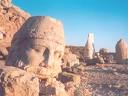 Philadelphia has long been nicknamed "The City of Brotherly Love." The name comes from the Ancient Greek words "phileo," meaning "love," and "adelphos," meaning "brother." The term "Philadelphia" therefore sets up the enduring civic handle "Philadelphia Brotherly Love." John of Patmos addressed this Revelation letter to "Philadelphia," also spelled "Philadelphus," or "Philadelphos," meaning "one who loves his brother." It is now called "Alasehir" on Turkey's western side. It was the youngest of seven cities founded by Pergamum colonists under Attalus the Second (BC 159-138.) ✞
Pennsylvania
Attalus's love for his brother "Eumenes" was such that he called him "Philadelphos" and named the city after him. William Penn (1644-1718), an English Quaker pioneer in 1682, founded Philadelphia, the largest city in the US state of Pennsylvania. It was no doubt named after an English Gloucestershire village but originally from the Biblical "Philadelphia." Local Quakers had a significant presence in the area. Penn notably said, "God must govern men, or tyrants will rule them," and "Right is right, even if everyone is against it, and wrong is wrong, even if everyone is for it." The democratic principles on which he established the colony became the inspiration for the United States Constitution. He was well ahead of his time and envisioned a "United States of Europe" in his essay, "European Dyet, Parliament or Estates." ✞
An Open Door
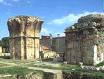 Philadelphia became an open door for Greek culture and language into Lydia and Phrygia. So well did it do its work that by 19 AD, the Lydians spoke only Greek and had forgotten their mother tongue. According to Sir William Mitchell Ramsey (1851-1939), the Scottish archeologist and New Testament scholar, Philadelphia became "the center for the diffusion of Greek language and letters in a peaceful land." The City of Philadelphia's open door was a marvelous missionary opportunity to spread the Good News. The Risen Christ spoke of the "open door" set before "Philadelphia." Three centuries earlier, "Philadelphia" had become an "open door" for Greek ideas in the lands beyond. Another excellent missionary opportunity appeared to bring the people who never knew the message of Jesus Christ's love. ✞
The Holy Christ
 In the introduction to this letter, the writer gives two great titles for Christ. Each of which implies an extraordinary claim. He is "him who is holy and true." "Holy" from the Greek "hagios" means "different or separate from." The seraphs sing, 'Holy, holy, holy.' Holy is God's description of himself in Isaiah 6.3b, "Holy, holy, holy is the Lord Almighty." In Isaiah 40.25, the Prophet asks, "'Who is my equal?' says the Holy One." All through the Old Testament, God is the Holy One. Now that title is given to the risen Christ as the holy Christ and "him who is holy and true." God is "holy" because God is different and separate from humans. God has that "quality of being," which belongs to him alone. ✞
The True Christ
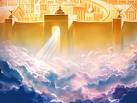 Christ is also the "real" or "true Christ." The Philadelphia Christians have little strength but are devoted and loyal to the true Christ, separate from humans but one of them. In the authentic Christ, there dwells reality. When he confronts us, he shows us no shadowy truth but that person "who is the truth" himself. John 14.6 asserts, "Jesus answered, 'I am the way and the truth and the life. No one comes to the Father except through me.'" He alone is the way, truth, and life! ✞
The Key of David
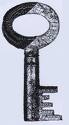 Jesus Christ, holy and true, holds David's Key, which opens the way into eternal life. David's key or David's house key refers to the New Jerusalem where Christ has supreme authority. The "key of David" signifies Christ's power to open the door into this future kingdom. Because Jesus has "the key of David," he opens, and none can shut, he shuts, and none can open. Jesus of Nazareth has the final unquestionable authority. ✞
Doorkeeper Eliakim
Behind this scene, there was an Old Testament picture from the Prophet Isaiah. King Hezekiah of Judah gave his faithful steward Eliakim the right to admit others to the king's presence. He was the key holder or doorkeeper to the royal court. Isaiah heard God say of this faithful servant in Isaiah 22.22, "I will place on his shoulder David's house key. What he opens, none can shut, and what he shuts, none can open." It is this Eliakim picture, which is in John of Patmos' mind. Like Eliakim, Jesus alone authorizes others to enter the New Jerusalem, David's city. As The Te Deum, a selection of verses from the Psalms composed by St Ambrose(340-397 AD), says, "Thou didst open the kingdom of heaven to all believers." Jesus is the believers' new and only way into God's presence! ✞
Open Missionary Door
 As Philadelphia previously was culture's open Greek door, Jesus Christ is the missionary door. What is the meaning of this "open door" that the Risen Christ has set before the Philadelphian Christians? Writing to the Corinthians in 1 Corinthians 16.9 of the work ahead of him, Saint Paul said, "because a great door for effective work has opened to me." When he returned to Antioch, he told the church in Acts 14.27 how God had opened his door to the Gentiles. He wrote, "On arriving there, they gathered the church and reported all God had done through them and opened a faith door to the Gentiles." ✞
Greek Language and Culture
"An open door" is a particularly appropriate description of "Philadelphia." King Eumenes 11 of Pergamum (BC 221-160) established it in 189 BC to be a border town for the Greek language and culture to the barbarous peoples beyond. Philadelphia had a vital position on the imperial postal service road from Troas to Philadelphia via Pergamum, Thyatira, Sardis, and Phrygia. Caesar's armies traveled that road. Merchants' caravans rode it, and it was beckoning Christ's missionaries as the new open door! ✞
The Jesus Door
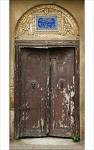 Jesus' door in Revelation presents a way into abundant life. Before every Christian, there is an open door of ministry opportunity. To be a missionary is to be called to an area to share the Good News, teach, educate or engage in healing ministries. A person does not need to leave our country or even our neighborhood to do this. There are those to be won for Christ within our home, school, circle of friends, bubble, or work associates. To use the opportunity's door is at once our privilege and responsibility. ✞
Faithfulness Reward
Philadelphia brotherly love proved faithful, but the reward for her faithfulness is surprisingly to do more work for Christ! The bonus of work well done is more to do in Christ's way. The Philadelphians' door could be Jesus himself. In John 10.7, Jesus describes himself as "the sheep gate." Just as a Middle Eastern shepherd slept across the sheepfold's opening to prevent a predator from entering and attacking the sheep, so Jesus guards his own who enter the sheepfold through him. Jesus himself is protecting his sheep. With Jesus Christ, David's new kingdom appears, so the Jesus door is there to admit only willing, contrite persons to God's kingdom and bar the way to all others. Jesus confirms this in John 14.6, "I am the way, truth, and life. No one comes to the Father except through me." ✞
Strategic Location
 Philadelphia's earthquake shocks and the following tremors from a seemingly extinct volcano came unexpectedly upon this ancient city's people. Philadelphia was a famous and wealthy Asia Minor trade center in the Roman Empire. It had a physical characteristic that left its mark upon this Revelation letter. It was on the edge of a vast plain called "The Burned Land." It sat on a fault line left behind by an extinct volcano and looked out on a broad flat valley. The land was naturally fertile, and Philadelphia benefitted by becoming a grape-growing region's hub and a famous wine producer. But its extinct volcano was still prone to eruption and earthquakes. ✞
Extinct Volcano
 Earthquakes left their mark on Philadelphia more than on most cities. The Greek geographer and historian Strabo (BC 63-24 AD) traveled widely from Egypt to as far west as Tuscany and Ethiopia. His works included "Strabo's Geography" around 7 BC chronicling political, economic, social, cultural, and geographic details of almost all of Europe, including the British Isles, Germania, Italy, Greece, the Northern Black Sea region, the Middle East, Central Asia, and North Africa. Strabo wrote that in 17 AD, a series of earthquake shocks destroyed Sardis and ten other cities. In Philadelphia, earthquakes and tremors continued for years, and Philadelphia became known as the "city full of earthquakes." ✞
People Panic
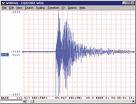 When earthquakes happen, people meet them with courage, but re-occurring minor earthquake shocks drive people to panic. In Philadelphia, shocks and aftershocks occurred every day, with gaping cracks appearing in house walls and roads. One part of the city was in ruins, then another. Most people lived outside their homes in temporary shelters on the streets. They feared to enter the town lest falling masonry should kill them. It was challenging for the Christian church, but Jesus encouraged them because they kept his word and did not deny his name. The ancient Philadelphian earth tremors terrified Asian Christians. We find that those who still dared to live there during the earthquakes were considered mad in the letters. They spent their time shoring up shaky buildings and fleeing to open spaces for safety. ✞
Jesus' Promise
 The earth's tremors were always on people's minds. They waited fearfully for the ground's shaking to end. Philadelphia Christians knew what security lay in the promise in Revelation 3.12 that "they would go out no more" when they had no earthquakes. John of Patmos wrote, "The victorious one I will make a pillar in my God's temple. Never again will they leave it." ✞
Bastion of Christianity
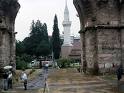 In later days, Philadelphia's brotherly love would make it great. When the Turks and Muslims flooded Asia Minor and every other town fell, Philadelphia stood firm against the invaders. It was a free Greek Christian city among Muslim peoples for centuries and the last bastion of Asian Christianity. It was not until midway through the fourteenth century that Philadelphia eventually fell, but there is still a bishop and a thousand or so Christians there to this day. Except for Smyrna, the other Churches addressed in the seven Revelation letters are now ruins. Philadelphia brotherly love, however, still holds the Christian faith banner aloft. ✞
"Philadelphia Brotherly Love"
by Ron Meacock © 2021
| ^Top Page | Next | Previous |