
| Next | Previous | Index | Tellout Home |
21. Corinthian House Churches
Seven Corinthian Assemblies
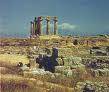 When the Apostle Paul wrote in 1 Corinthians 1.2 to the Corinthian house churches, the contemporary reader has no way of knowing whether or not he addressed the believers' total in many Corinthian house churches. He said, "To God's Corinth church, to those sanctified in Christ Jesus and called to be his holy people, together with all those everywhere who call on our Lord Jesus Christ's name — their Lord and ours." The church custom was to copy church leaders' letters and forward them to other churches. All the household churches heard of any of Saint Paul's epistles received by one. Upon closer examination, we discover the possibility of at least seven Corinthian Christian assemblies in Saint Paul's letters though there could be even more. ✞
Aquila and Priscilla
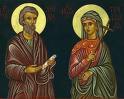 First, there is the home of Aquila and Priscilla. Saint Paul calls "Priscilla" by the shorter word "Prisca," a common Latin name, but Saint Luke prefers the more formal "Priscilla." They were wealthy Jewish converts to Christianity who settled in Corinth, according to Acts 18.2. "There, Paul met a Jew named Aquila, a Pontus native, recently returned from Italy with his wife Priscilla because Claudius had ordered all Jews to leave Rome. Paul went to see them." Emperor Claudius (BC 10-54 AD) expelled many Jews from Rome in 49-50 AD. Saint Paul began his Corinth stay by living in Aquila and Priscilla's home, where they carried out a tent-making trade. This house was most likely a street-level storefront home that doubled as a work/retail outlet and domestic residence. ✞
Significant Worship Places
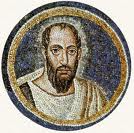 During Saint Paul's eighteen-month stay in Corinth, according to Acts 18.11, he devoted himself to "teaching them the word of God." Corinthian house churches were significant places for proclaiming the gospel, teaching, and gathering believers for worship. Aquila and Priscilla then moved on to Ephesus according to Acts 18.18-19, where we read, "Paul stayed on in Corinth for some time. Then he left the brothers and sisters and sailed for Syria, accompanied by Priscilla and Aquila. Before he sailed, he had his hair cut off at Cenchreae because of a vow he had taken. They arrived at Ephesus, where Paul left Priscilla and Aquila and started a house church there. He went into the synagogue and reasoned with the Jews.". Arthur G. Patzia, in "The Emergence of the Church - Context, Growth, Leadership, and Worship," underlines Paul's greeting in Romans 16.3-5, "Greet Priscilla and Aquila, my co-workers in Christ Jesus. They risked their lives for me. Not only I but all the churches of the Gentiles are grateful to them. Greet also the church that meets at their house. Greet my dear friend Epenetus, who was the first convert to Christ in the province of Asia." "Priscilla and Aquila" and "the church in their house" imply that they returned to Rome, probably after Emperor Claudius lifted his edict banning the Jews. ✞
Deacon Phoebe
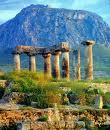 Saint Paul's writings clearly described the Corinthian house churches and those of Cenchreae. Saint Paul commended Phoebe as "a deacon" and "benefactor" or "patron" of the Cenchreae church. A "deacon" is a "servant" or a "Christian designated and qualified to serve with the overseers/elders of the church." "Phoebe," by the way, is also the name given to one of Saturn's moons and was photographed during the Cassini spacecraft mission in 2004. Astronomers use the Greco-Roman Titan names for the moons of Saturn. But as astronomers discovered new moons, they began selecting other titles from other mythologies, including Gallic, Inuit, and Norse. Phoebe is another name for the goddess that the Greeks called Artemis and the Romans called Diana. She was the youthful goddess of Earth's Moon, forests, wild animals, and hunting. Sworn to chastity and independence, she never married and was closely identified with her brother Apollo. The fact that Saint Paul commended Phoebe infers she was an independent woman with some wealth in the harbor town Cenchreae. Romans 16.1-2 reads, "I commend to you our sister Phoebe, a deacon of the church in Cenchreae. I ask you to receive her in the Lord in a way worthy of his people and give her any help she may need from you. For she has been the benefactor of many, including me." Since Cenchreae is only seven miles from Corinth, the Cenchreae churches were probably considered part of the Corinthian church group. "God's Corinth church" is described in 1 Corinthians 1.2, "to those sanctified in Christ Jesus and called to be his holy people, together with all those everywhere who call on our Lord Jesus Christ's name — their Lord and ours." ✞
Church Fragmentation
The "whole church" mentioned in Romans 16.23 consists of several local Corinthian household churches, each somewhat different in its ethnic, social, and economic mix. Saint Paul refers in the same passage to "God's church in Corinth" and to the believers coming together "as a church." In 1 Corinthians 11.18, "In the first place, I hear that when you come together as a church, there are divisions among you, and to some extent, I believe it." Another implication in Romans 16.23 is where Saint Paul writes, "Gaius, whose hospitality the whole church, and I enjoy, sends you his greetings." Gaius is probably hosting the entire Corinthian household church group, which suggests that Corinth has occasions when all the believers assembled. This thesis explains some Corinthian household churches' fragmentation concerning church leadership, worship, morality, and social status. Saint Paul probably sent correspondence to the Corinthian house churches and individual sections to specific churches that had encountered particular problems. In time, these letters were shared with other churches and read at worship services before being collected and edited as 1 and 2 Corinthians. ✞
Titius Justus
 Christians meet and worship at Corinthian church households described by Saint Paul in his letters and by Saint Luke in the Acts of the Apostles. Corinth was a city-state on a narrow strip of land that connected to the Greek mainland. It was between Athens and Sparta. Doctor Luke mentions several Corinthian church households in his Acts of the Apostles, including that of "Titius Justus" or possibly "Titus Justus." His name indicates that he was a Roman by birth, a "worshiper of God," and a Gentile sympathizer to Judaism in Corinth, whose house is next to the synagogue. In Acts 18.7, Saint Luke also writes, "then Paul left the synagogue and went next door to Titius Justus'house, a worshiper of God." Titius Justus was possibly evicted from the synagogue and established a Household of Faith in his home. This meeting of Saint Paul with Titius Justus enabled Saint Paul to reach society's upper class. Crispus was a synagogue official and also held home gatherings. These individuals' conversion and baptism, including "Crispus' household," indicated a sizeable believers group in Corinth during Paul's eighteen-month ministry. There is also the mention of Crispus' baptism in 1 Corinthians 1.14. Saint Paul writes, "I thank God that I did not baptize any of you except Crispus and Gaius." There were also many other Households of Faith in Corinth, according to Acts 18.7-11. Undoubtedly, Titius Justus' and Crispus' homes were utilized for church gatherings, "teaching God's word of among them." Saint Paul also referred to "the household of Stephanas' baptism" in 1 Corinthians 1.16 as one of Achaia's first converts. In 1 Corinthians 16.15a, he writes, "You know that Stephanas' household were Achaia's first converts, and they have devoted themselves to the service of the Lord's people." Stephanas was commended so highly by Paul for his devoted service to the saints leads us to suppose that he may have hosted and directed one of the Corinthian House Churches. ✞
Chloe's People
 Corinthian House Churches are described widely in Saint Paul's writings as the basic Church unit of the new Faith in that place. There is an interesting reference in 1 Corinthians 1.11-17 to "Chloe's people" or "Chloe's household." It reads, "My brothers and sisters, some from Chloe's household, have informed me that there are quarrels among you. What I mean is this: One of you says, 'I follow Paul'; another, 'Apollos'; another, 'Cephas [that is "Peter"]'; still another, 'Christ.'" Chloe journeyed across the Aegean Sea from Corinth to Ephesus with a disturbing report of factions within the Corinthian house churches. "Chloe's people" may have also included her family members and employees. Professor Gordon D. Fee (1934-present) suggests that Chloe "was a wealthy Asian woman whose business interests required her agents to travel between Ephesus and Corinth. If true, her economic means and concern for the church suggest that she may have had a significant role in one of the house churches." ✞
Gaius' Baptism
 Saint Paul commended Gaius as one of three individuals in the closing chapter of Romans, which he wrote from Corinth. This explicit reference to Gaius on his baptism by Paul is in 1 Corinthians 1.14, "who is host to the whole church and I." Romans 16.23 leaves little doubt that he too was another church benefactor. Paul also sent greetings from Erastus, described as "the city treasurer," and another brother, Quartus, in Romans 16.23. While Erastus may not have been one of Paul's fellow workers, his position gave him a higher social rank and economic status than most people, perhaps enough to make him another house church patron. ✞
"Corinthian house churches"
by Ron Meacock © 2021
| ^Top Page | Next | Previous |