
| Next | Previous | Index | Tellout Home |
32. Christ's Worldwide Body
Jesus the Head
 The Worldwide Body is only valid when directed by Christ, who is the head. Heresy, disobeying the leader, disables, or even cuts off a church denomination from the body. The body hurts when this happens, for Jesus Christ died for the church! One faith does not have a monopoly over all the Christian church's functions. The three major streams of Catholic, Protestant, and Pentecostal unify the body by their various roles. Those in the Catholic tradition bring a history of liturgy and worship. ✞
Churchmanship Roles
The Roman Catholic and Eastern Orthodox churches maintained worldwide Christianity from the third to the fifteenth centuries of its life. Protestants generally major on personal faith and benefit the overall church by concentrating on adherence to Biblical teaching. It is the churches of the Reformation that rediscovered the Scriptures and renewed the church over four centuries. The Pentecostal strand of Christianity encourages the Holy Spirit's work to be re-established in God's church and re-energizes her. Like the three strands of a rope, the Catholic, Protestant, and Pentecostal movements give great strength in their diversity to Christ's body. ✞
Catholic Protestant Pentecostal
When one is weak, the other two take the load. The Pentecostal and Protestant strands were vital in the New Testament church, especially in the Gentile churches. In the Early Church, it is the protestant section that brings such widespread evangelistic growth. Still, after the fourth century, the Catholic wing was in the ascendancy while the other two faded but remained in the background. At the Reformation, Protestants again came to the fore. At the end of the Nineteenth Century, Pentecostal renewal swept through the church. True disciples of Jesus Christ are therefore entirely Protestant, completely Pentecostal, and thoroughly Catholic. Genuine Christianity holds these three truths together at the same time. ✞
Tate Family Names
 Tate family names illustrate how the many limbs, members, and organs contribute to the body of Jesus Christ. God rejoices in the differences in the body under the headship of Christ. The parts and organs each contribute to its overall effectiveness in the world. Consider the dysfunctional Tate family. Dick Tate wants to run everything, Ro Tate, tries to turn everything around, and Adgy Tate, who stirs up trouble wherever possible. When one suggests anything new, Hesi Tate and Vegi Tate pour scorn on any new ideas. Imi Tate copies everyone else, Devas Tate loves to upset things, and Poten Tate, of course, wants to be the absolute leader. However, Facili Tate, Cogi Tate, and Medi Tate always save the day and get everyone pulling together. ✞
Teamwork and Cooperation
Every part of the Body of Christ should pull together. Some denominational body parts are busier than others. As far as we know, the earlobes do not move or contain any vital organ, yet they are still as much a part of the body as the heart or the legs. Whatever they do, the individual organs need one another, and none is better or worse for the lofty or lowly task it performs. Being the social agency of the body, the hands are neither better nor worse than the uterus. Each limb and organ needs the other if the body is to function correctly. Teamwork and cooperation are also essential. In "The Sacred Diary of Adrian Plass," Gerald said he had thought of the right name for the church if all the denominations formed into a united group. "It's simple," he said, "We'll call ourselves the Maptocostal Angloholics!" ✞
Reformation Church Denominations
 All Reformation church denominations are united in the mystical body of Christ, and each has a mission-shaped ministry. Reformation denominations have been a significant force in church life since 1517 AD. Martin Luther (1483-1546 AD), the German professor of theology, composer, priest, and monk, pinned the "Ninety-five Theses" to the door of All Saints Church in Wittenberg, Germany. ✞
Varieties
The various denominations that ensued have survived and flourished because each has some unique feature that distinguishes them from the rest. These differences in Christian denominations are generally about practice and theology, which causes splinter groups to separate from the main body. The Anglican Church of England began from the Roman Catholic Church c1532-1534 AD with the "Act of Supremacy." Methodists came out of the Anglican church. The Salvation Army separated from the Methodist church, and so on. Sometimes these splits in Protestant Reformation denominations were a reaction to abuse, a change in belief or practice, or were caused by pressure to be politically rather than Biblically correct in the modern age. ✞
Free and Wee Free
Interestingly, I came across an unusual example of churches dividing in Scotland during my time as a student of the Bible Training Institute in Glasgow. There was the "Presbyterian Church," the official Church in Scotland. From that developed the "Free Presbyterian Church," the second largest Presbyterian Church with 29 churches after its exit from the Auld Kirk in 1843. It now has 45 congregations worldwide. Then there are a further two "Wee Free Presbyterian Churches" which separated after the Union of 1900. The "Wee Wee Free" or "Wee Wee Wee Free Presbyterian Church" are not churches but a derogatory phrases used by the some Presbyterians of the "Wee Free Presbyterian Church!" I attended one Free Church of Scotland service and was taken by the beauty and simplicity of their worship. There was no church organs but instead someone gave the note on a pitch pipe and all then joined in. We basically sang Psalms and there was a robust sermon! ✞
Scottish Denominations
There have been many divisions since the Scottish Reformation in 1560. Currently there are at least nine denominations. These include the Church of Scotland, the Scottish Episcopal Church, and the Roman Catholic Church. There are 3 other Presbyterian churches including the Reformed Presbyterian, the Associated Presbyterian, and the Free Presbyterian. There are also 3 Free Churches comprising the United Free, the Free Church of Scotland (continuing) and the Free Church of Scotland. Each one has no doubt its distinctive features and beliefs. ✞
Church Government
 On occasion, these denominations represented different forms of church government. One church thus became Methodist, another Free Methodist, a third the Wee Free Methodist. Loren B. Mead (1930-2018) of Florence, South Carolina, described this phenomenon in "The Once and Future Church," "There was a make-believe quality in each shard's assumption that its world was a microcosm of the whole world of which it was the remnant as if nothing else exists." This view still unfortunately exists today. ✞
Body Parts
Church denominations represent parts of the Mystical Body of Christ. Some are brains that think through faith, and other parts care. While church denominations may represent different beliefs, practices, and forms of government, they also represent the broader Body of Christ's parts where Jesus is Lord. Various kinds of administration may distinguish denominations. Anglicans have Bishops, Priests, and Deacons, the Salvation Army has Generals, Captains, Lieutenants, and wrap their infants in a flag to dedicate them. The Catholics have cardinals and a chief Bishop of Rome they call the Pope. The Presbyterians have a council of elders with a professional teaching elder. As far as I can see, Quakers try to avoid any hierarchy whatsoever though I am sure it is there somewhere. ✞
Practices and Administration
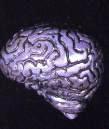 Church body denominations are like the organs, limbs, and parts of a real body. They all have a general function but typically also have one area in which they particularly excel. English Anglicans featuring many eminent theologians and writers may be brains that think through and theologize the faith. The Presbyterians are possibly mouths that excel in Gospel preaching. Baptists are seen as the uterus or birth organs to increase the body's overall size by emphasizing the need for personal salvation. The Salvation Army is widely recognized as a hand to carry the church's caring ministry into the world. Others, such as Quakers, are known as movements of peace and meditation. In these many ways, each denomination provides what the body needs. ✞
Media Effects
Church denominational differences are being whittled away by the media, who seek maximum impact for themselves all the time. At the time of the Reformation, protestants would have no decoration or symbolism in their churches and even whitewashed over medieval paintings in the name of religious purity. Today on television, the descendants of those same zealous protestant evangelists surround themselves with banks of flowers and row upon row of vested choir members in glorious silk gowns. The media demand color, variety, and visual excitement and do not care particularly for denominational beliefs except when it creates controversy and thus good theatre. The overall effect is to merge the differences in beliefs and practices in favor of the total production value. ✞
Live Together
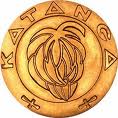 There are many church denominational differences, and they all appear in the Body of Christ. The Belgian Congo Revolution in 1961 clearly illustrated their unity. All Christians belong to the denominational body, whether they want to or not. They are bound together, live together, and sometimes die together in Christ. The Rev. Dr. Colin Morris (1929-2019), the communicator and Methodist leader, told of the bloody counter-revolution in the Belgian Congo in 1960-1961 AD. He wrote, "Over three hundred missionaries, mostly Roman Catholics and extreme fundamentalists, died. They not only bled the same way, but whether they died clutching crucifixes or Schofield Reference Bibles, they died for the same reason and the same Lord." Will the church grow by erasing church denominations? ✞
Splinters Produce Growth!
Interestingly, research shows that when churches amalgamate, the overall body generally shrinks in size. According to eminent analyst and church growth expert Dr. Donald McGavran (1897-1990), who spent many years in the mission field in India, gave examples from South Korea to show that when churches splinter on questions of practice, they generally grow! He pushed for a School of World Mission at the Fuller Theological Seminary in Pasadena, California, and became its first Dean. He came to Toronto in the 1980s to speak to the clergy. He was a very amusing and knowledgeable speaker and loved to crack jokes at Anglican's expense! He believed that the Lord seemed to want his denominational body to contain as many differences as possible. At the same time, theological unity in Christ is necessary while resting upon his word. Jesus is head over all the parts as in all the emanations of the Mystical Body. ✞
"Christ's Worldwide Body"
by Ron Meacock © 2021
| ^Top Page | Next | Previous |