
| Next | Previous | Index | Tellout Home |
26. Gentle Christian Mentoring
Praying Mentors
 We all have Christian mentors in our lives, whether we realize it or not. Caring for the weak, young, disabled, and one another bonds the members of the Household Body together. Gentle Christian mentoring happens when we offer our resources in Christ, and they become the other person's resources. Others are praying for our well-being all the time though we may not know it. Saint Barnabas mentored a new convert to the faith, Saint Paul. Saint Paul then mentored a young Timothy and so on. As a child in the early fifties, I remember two elderly spinsters, Miss Church and Miss Butt, visiting our home every week and collecting insurance money from my mum and dad. My family paid pennies every week to ensure that they could bury us properly. That particular poor community expected this. ✞
Hiking Socks
Miss Church and Miss Butt became Christian mentors to my brother, my sister, and me and brought us into a schoolhouse Sunday school, thus planting the seeds of our later commitments to Christ. I do not doubt at all that they regularly prayed for us right up to the end of their lives. All three of us continue in the Christian faith even to this day. Another of my mentors as a teenager was a boy scout leader named George Hoffman. George prompted me to participate in church and scout activities, though my family could barely afford it. On one occasion, George even gave me a pair of hiking socks because he cared and wanted me to enjoy a weekend hike. Hiking socks still remind me of the gentle mentoring of what I now consider a great Christian man of God. George Hoffman later became the Executive Director of Tearfund in Britain before being killed in a tragic road accident. I thank God for his caring in Jesus' name. Rest in Peace, George, and also Miss Church and Miss Butt! ✞
Total Christian Commitment
 Total Christian commitment to our Lord and supporting each other are essential qualities of members of the Body of Christ. There is a funny story about a hen and a pig strolling down the road one day when a truck roared past bearing the sign, "HAM AND EGGS." "See," clucked the chicken to the pig, "you and I are partners." "Yes," snorted the hog, "but for you, it's a day's work. For me, it's a total commitment." Christian commitment also needs to be total commitment. Christians mature as they support each other on their spiritual journeys and give themselves in total Christian commitment to one another. ✞
Husbands and Wives
 Committed husbands and wives are also encouraged to be gentle Christian mentors to spend time together, hold hands, and talk. Mentoring in a Christian marriage means committing to the other person, for Christian marriage involves nothing short of total commitment. Saint Paul urges in Ephesians 5.33, "However, each one of you also must love his wife as he loves himself, and the wife must respect her husband." But the apex of the mentoring process is the commitment of a Christian to Jesus Christ. The "Bride of Christ" or the "bride" or the "Lamb's wife" are terms used of the church in the Gospels, Revelation, the Epistles, plus other related verses in the Old Testament to emphasize gentle Christian mentoring. Sometimes, the "Bride" is implied by calling "Jesus the bridegroom." For over 2000 years, the "church" has been the "bride betrothed to Christ." Our love for Jesus is a reflection, albeit imperfectly, of Christ's love for his bride, the church. ✞
Physically Challenged
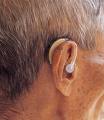 The physically challenged in the Mystical Body of Christ are essential, especially concerning their need to access church buildings. In the Household Body, as in the human body, the rest supports the physically challenged. If one kidney shuts down in a human body, the second steps in and enlarges to work for both. I can attest to this, for I have had only one functional kidney for at least twenty years! Similarly, when an ear goes deaf, the head automatically twists so that the eye can lip-read the words spoken. The body does not excommunicate the ear because of its deafness. It stimulates it as a valuable member but simultaneously turns to another part for help. ✞
Sign Language Inventor
Abbot Charles-Michel de l'Épée (1712-1789) was called "the Father of the Deaf" after encountering two deaf sisters in Paris who communicated using sign language. He decided to dedicate himself to the education and salvation of the deaf. He began a "signed French" system so that hard of hearing people could legally defend themselves in court. Two years after his death in 1789, France's National Assembly recognized him as a "Benefactor of Humanity." Thus signing for the deaf, which is used today around the World, began. The deaf, the frail, the disabled, the elderly, children, and babies are entitled to the greater honor and are vital to the Mystical Body of Christ. ✞
Accessible Buildings
 The physically challenged are the reason that all our Church buildings must have elevators and hearing impaired equipment. Otherwise, our actions declare, "we don't care for the physically or mentally challenged persons or those with other disabilities!" Otherwise, Christians dishonor the Body of Christ. In most places, the local school, the library, and the supermarket are accessible, but not God's house! The sign outside may read, "All Are Welcome," but unknowingly, a congregation's inaccessible building gives the subtle message to the community, "the physically challenged are not welcome here!" I believe our churches and leaders have to do much better! ✞
Weaker Children Role
 The role of weaker children in the Body of Christ is crucial as the less strong and the challenged are indispensable parts and hold passports to the Kingdom of God. The role of children in the Household Body has a particular significance. Saint Paul wrote in 1 Corinthians 12.22-23a, "On the contrary, those parts of the body that seem to be weaker are indispensable, and the parts that we think are less honorable we treat with special honor." Children and those who are mentally challenged or otherwise disabled have a special place in the Body of Christ. The Law regards children and babies as their parent's property, and society often treats them as miniature adults. Sometimes people consider children an inconvenience, a nuisance, or an unwanted expense. ✞
Honor and Love Children
In the Christian Body, however, infants and babes are to be honored and loved. The Apostles tried to discourage mothers from bringing their babies and little children to Jesus, but he blessed them. His assertion in Matthew 19.14 rocked his listeners on their heels and challenged his hearers even today. Jesus said, "Let the little children come to me, and do not hinder them, for the kingdom of heaven belongs to such as these!" The Kingdom of God guarantees a place for little children, babies, and the disabled! Children are such a unique and wonderful blessing! ✞
Kingdom Passport
 By word and action, Jesus emphatically taught that the roles of children, babies, and challenged adults were crucial as they held passports to the Kingdom of God. They do not have to qualify like adults but already possess full membership. When young people reach the age of discretion, they need to accept or deny the Christian faith to be ensured passports into God's Kingdom. Before that time, children are, I believe, automatically a part of God's Kingdom. Children are individuals as far as God is concerned and deserve special and honorable treatment. ✞
Simple Childlike Faith
 The simple childlike faith required of God by Christians is not childish but childlike, humble, and sincere, for all children belong to God's kingdom. The Early Church acted on their Christianity in Rome by rescuing and caring for unwanted and abandoned newborn babies. Often female babies, in particular, were unwanted in Roman cities and left outside on the doorstep for wild dogs to carry off! Christians responded to this dreadful, gruesome practice by creating orphanages to care for these precious ones. ✞
Childlike Faith
In recent times, Mother Teresa (1910-1997 AD) would go out onto Calcutta's streets with her sisters and bring the sick and dying back to the convent. They would then nurse them until either they recovered or died peacefully. She was praised for her opposition to abortion and made people feel loved no matter what their circumstances. Like infants, mentally challenged persons in her care may never develop the ability to make choices for themselves. They may remain in childlike faith within God's Kingdom until their lives end. ✞
Uncomplicated Christian Affection
 Some Down syndrome children though delayed in their mental development, have an abundance of love. Down syndrome (DS), also called "Trisomy 21," is a condition in which a person is born with an extra chromosome. With Down syndrome, the extra chromosome causes delays in how a child develops, mentally and physically. Over the years, I have personally had several Down Syndrome teenagers in my congregations. They would frequently throw their arms around you when you arrive and do not want to let go. Such uncluttered, uncomplicated affection and simple faith are appropriate for all those in God's kingdom. Jesus calls his full-grown disciples to this kind of childlike faith. ✞
Homer's Odyssey
To practice gentle Christian mentoring with someone, especially a younger colleague, is to advise or train them. A mentor may also be a guide, confidant, counselor, consultant, or even a therapist. A mentor is a more experienced or knowledgeable person who helps and guides a less mature and learned person. It is relationship-based. The word "mentor" is probably inspired by the character of "Mentor" in "Homer's Odyssey," which is a two-part ancient Greek epic poem attributed to the poet Homer (BC 750-?). Homer was a friend in his old age to Odysseus, who, when he left for the Trojan War, placed Mentor in charge of his son Telemachus. Homer said, "A sympathetic friend can be quite as dear as a brother." The story's actual mentor was probably an older man who guided a young Telemachus in his time of difficulty. ✞
Jesus Our Clone Model
The masterful mentor Jesus is our model for the gentle Christian mentoring of other Christians in the Mystical Body of Christ. In the Gospels, Jesus is pictured as the masterful mentor as he moves amongst people almost without them knowing it. Rather than cloning disciples, he encourages them to think for themselves. Without realizing it, they invariably embrace his ethical codes and examples. Jesus, the mentor, gives us an example in his own life of what we should be like, not just what we should do or say! ✞
Jesus' Mentorship
An example is found in Jesus' mentorship by the Father. The Apostle John wrote in John 5.19-20, "Jesus gave them this answer: 'Very truly I tell you, the Son can do nothing by himself, he can only do what he sees his Father doing, because whatever the Father does the Son also does. For the Father loves the Son and shows him all he does. Yes, and he will show him even greater works than these so that you will be amazed.'" ✞
Like the Rest
 One day, a University professor saw that a motley-looking hound dog had strolled into his lecture hall and started barking aggressively at the rostrum. After vainly trying to shout over the racket, the professor gave up, and turning to the dog, exclaimed, "If you're going to stay, you'll have to behave yourself and act like the rest of the students." To the class's great delight, the dog curled up on the floor and was soon peacefully asleep! ✞
"Gentle Christian Mentoring"
by Ron Meacock © 2021
| ^Top Page | Next | Previous |