
| Next | Previous | Index | Tellout Home |
22. Christian Bishop's Wife
Saint Paul's Teaching
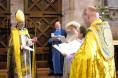 The Christian wife of a bishop in 1 Timothy 3.11 "is to be a woman worthy of respect." Interestingly, the word "Wife" is the same word used of a "deaconess," though technically, this refers to women in the Early Church ordained to the order of deacons. It means that the Bishop's wife has an authentic ministry of her own, besides her relationship to the Bishop. "Although St. Paul mentioned deaconesses at Cenchreae, and John Chrysostom considered the model appropriate for both sexes, deaconesses vanished from the church for hundreds of years until revived by Theodor Fliedner in Kaiserswerth, Germany in 1836. She founded a deaconess community among Lutherans." ✞
Deaconesses
Episcopalians in Baltimore, Maryland, started similar work in 1855. The nineteenth-century deaconess movement involved women living in community while carrying out traditional diaconate ministries, especially teaching and serving the poor in industrialized cities." The first deaconess, "per se" in the modern era, was Elizabeth Catherine Ferard of the Church of England in 1862. Women and men have an equally important role in both the Old Testament and the New Testament church. It is not gender but the person's spiritual and moral qualities that are the deciding factors for ministry suitability. The Scriptures clearly outline those who have the qualifications for the role. ✞
Jesus Own Household
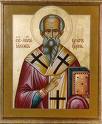 Jesus' household was of considerable significance and pre-eminent in the Early Church. Jesus called himself "the householder" in Matthew 10.25 and, in a different sense, criticized the household of Beelzebub. The words Beelzebub or Beelzebul describe an evil god from the Philistine city of Ekron the Canaanite god Baal. Beelzebub is another name for Satan. ✞
Household Servants
Jesus also describes himself in Matthew 10.24 as "the master" and his disciples as " household servants." Even though Jesus' brothers and family do not figure prominently in his early earthly ministry, his brother James who is elsewhere called "Saint James the Just," comes to the fore to become a leader in the Jerusalem church. ✞
Jesus' Family
Another brother, Saint Jude, composed an epistle which was later accepted into the of the Bible's canon. The Reformer, Martin Luther 91483-1546) didn't like it and called it "an epistle of straw!" Saint James and Saint Jude were of the line of David like Jesus and half brothers of his. Aside from these two half brothers in Matthew 15.35, there were also Joseph or Joses, and Simon. Two half-sisters of Jesus appeared in early traditions whose names were possibly Mary and Salome. Jesus was conceived in Mary, his mother, by the Holy Spirit, whereas his half-brothers and sisters are Mary and Joseph's offspring. ✞
Early Church Overseers
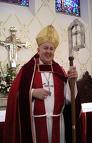 Early church leaders required specific leadership characteristics for their ministries. Those males who successfully managed their households were considered suitable and qualified to be Early Church leaders. We note that the same word for "bishops" may also be translated as "elders" or "overseers." The elder appointed deacon in the Early Church over a household or group of households. Saint Paul says that overseers have the care of all the churches. He writes in 1 Timothy 3.2-5, "Now the overseer must be above reproach, the husband of one wife, temperate, self-controlled. He must manage his own family (or "household") well and see that his children obey him with proper respect. If anyone does not know how to manage his own family, how can he take care of God's church?" In some Bible versions, the word "family" substitutes for the word "household." ✞
Husband of One Wife
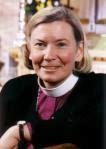 As for a leader today, an essential qualification for an early church overseer was to be "the husband of one wife." This scriptural phrase may be a warning against immorality and bigamy for an overseer or elder but never the less stands on its own merits. It is also an explicit prohibition from the Scriptures themselves against female leaders in the church. In our present society, this is not considered"politically correct" versus "Biblically correct." ✞
Deacon's Qualifications
Saint Paul lists the moral and leadership characteristics required of a church leader. He writes in 1 Timothy 3.1-13 "A deacon must be the husband of but one wife, and must manage his children and his households well." Though Saint Paul explicitly reserve overseers, deacons, and priests to be married males, this does not mean that all other leadership roles should also be male. One should also examine the qualities expected of a overseer's wife to clarify the female role in ministry, which is an important one. ✞
Jesus Christ's Tomb
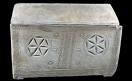 Interestingly, Jesus Christ's tomb, and his remains were not particularly relevant to his family as they believe and knew that his spiritual body was not there. When Emperor Constantine's mother, Helena (246-330 AD), a Christian woman, went to the Holy Land to find the principal places referred to in the New Testament life of Jesus, she found that many sites were not marked nor even known by the Christian communities. Those she found, she built small chapels above. The Church of the Nativity in Bethlehem and the Church of Eleona or the Church of the Disciples on the Mount of Olives are examples of this. "Eleona" is Greek for olive grove and was linked to the Ascension. Interestingly, the land on which the remains of the church stands have been claimed by France as a "French Domaine National." ✞
Final Resting Place
Pilgrims come to the Church of the Holy Sepulchre in Jerusalem, and to the small shrine called "The Edicule" or the tomb of Jesus, which is possibly the final resting place of the body of Jesus before the resurrection. In recent times, the marble slab placed there 1700 years ago has been uncovered to reveal "the holy bed." Scientists have analyzed the debris there and dated it as 1700 years old to 400 AD. They removed minute samples of mortar, which are determined to have come from 400 AD, which would authenticate when Emperor Constantine's (272-337 AD) mother Saint Helena (c246-330 AD) built the Edicule to indicate a particularly sacred spot in Christianity. Some modern scholars believe that the remains of Jesus Christ's family tomb to be near Jerusalem under a block of flats. Access for a camera through a ventilation pipe showed the tomb and its contents. They discovered an ossuary or bone box in the tomb with some unusual and distinguishing marks on it. This indicates, if it is Jesus' family tomb, the traditional importance of all members of Jesus' family buried with their kindred in the same place. ✞
Ossuary Markings
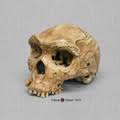 Contrary to our modern view, the Jesus' family tomb items' location would not have been that relevant to early Christians because they believed in the resurrection of the body. Any bones, especially these of Jesus' family are to be dealt with respectfully, but they are not necessary to the faith any longer. When the institutional church arose, and they discovered that some of the bones of the saints and even the tombs of the saints had healing properties, the church in Rome, as well as wealthy individual Christians in other places, started collecting bones of the saints, pieces of the cross, and nails etc. There is no doubt that the bones, physical remains, and even the gravesites of the Apostles and early saints contained healing properties. Many people were healed by touching the bones or even standing at a saint's grave. Only those with a genuine conversion usually have access to spiritual healing. ✞
Jesus' Blood Line
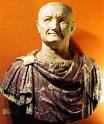 In 70 AD, Emperor Vespasian (9A-79 AD), in an attempt to wipe out the bloodline of Jesus and his followers, ordered a search for descendants of Jesus, believing the line of David to be the royal household of the Early Church. Saint James, the brother of Jesus and leader of the church in Jerusalem after Saint Peter, was killed. He was regarded as the "Protector" or "Prince Regent" until the imminent expected return of his brother Jesus, the Messiah. The historian Eusebius (260-339 AD) reported that after the authorities killed James, another relative, a cousin of Jesus called Simon, son of Clopas, became the Jerusalem congregation's leader. These family members were sought after and persecuted by the authorities in an attempt to stamp out the Christian faith. Christianity was now a threat because of the sheer numbers and influence of its adherents. ✞
"Christian Bishop's Wife"
by Ron Meacock © 2021
| ^Top Page | Next | Previous |